Best Wood for a Sauna: Walls, Benches, Floor and What to Avoid
By the Sauna Advice editors 9 min read Updated November 26, 2026
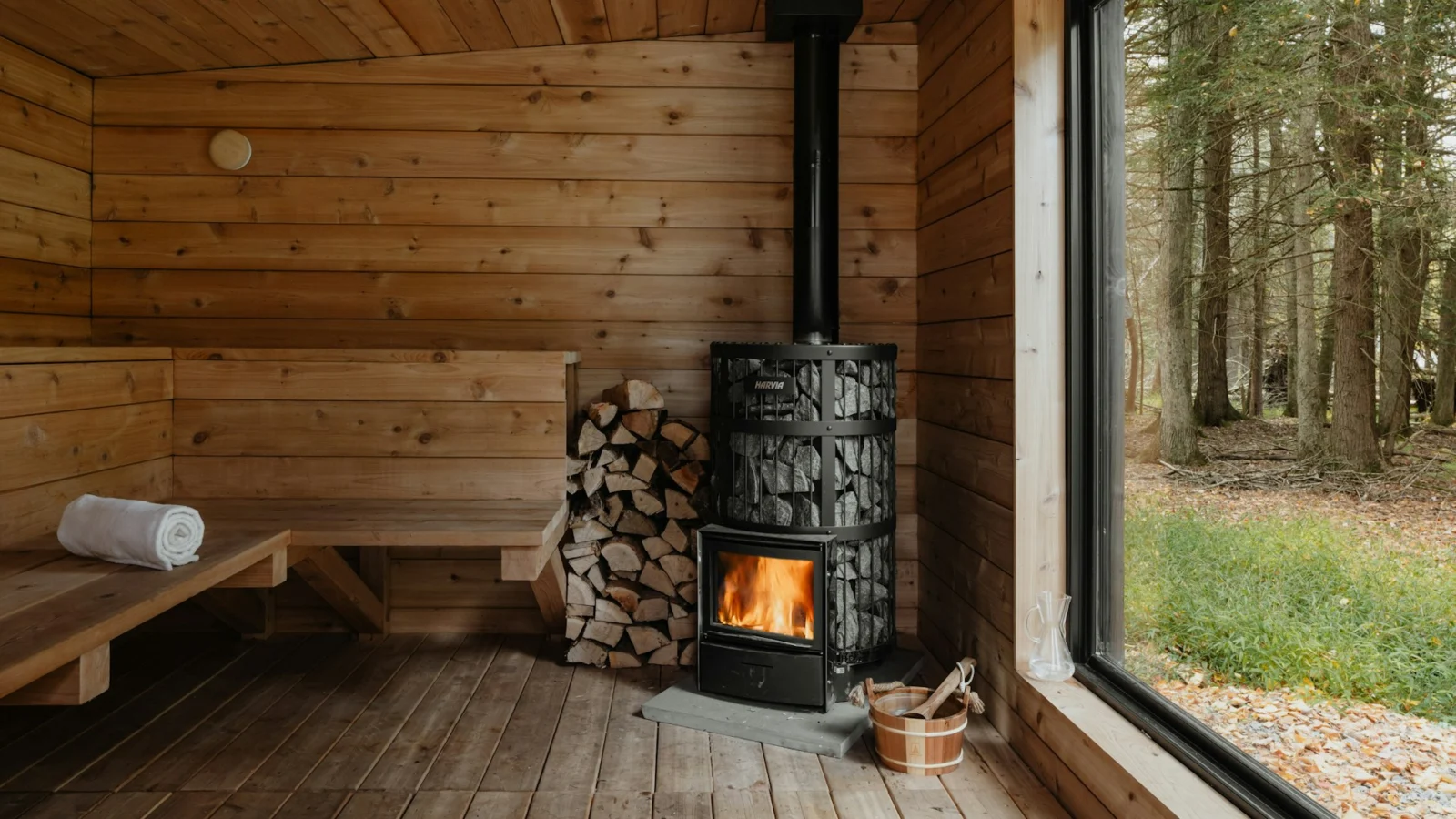
Worth remembering
- Harvia's US manual lists spruce, pine, aspen, alder and cedar for sauna paneling.
- Paneling should be kiln-dried to 11% moisture content or less.
- Bench boards should be as knot-free as possible and screwed from underneath.
- Thermory says its thermal modification uses only heat and steam, with no chemicals.
- Harvia and HUUM both advise against ordinary stains, varnish and paint on interior wood.
- Harvia's US manual recommends concrete, tile or heavy-duty vinyl flooring, not carpet.
- Burn only dry, untreated firewood in a sauna stove; EPA says under 20% moisture.
In this guide
- Which wood goes where in a sauna
- Western red cedar: the US default, with one caveat
- Hemlock, spruce and pine for walls
- Aspen and alder: the low-resin bench woods
- Thermally modified wood (Thermory and others)
- Sauna floor: wood or not
- What to avoid in the hot room
- Finishes: why most sauna interiors stay untreated
- Firewood for a wood-burning sauna stove
The best wood for a sauna is a clear, kiln-dried softwood or light hardwood with little resin, installed without paint or varnish. Harvia’s installation manual for its US KIP heaters lists spruce, pine, aspen, alder and cedar as suitable tongue-and-groove paneling, dried to a moisture content of no more than 11%. The same wood, or another one from that list, is used for the benches, with knots kept out of the seating area.
Species matters less than most retailer pages suggest. What decides whether a sauna room lasts is that the wood is dry when installed, free of resin pockets where skin touches it, untreated, and backed by a proper vapor barrier and air gap. Within those rules, the choice comes down to scent, color, budget and what the sauna is: an indoor room, an outdoor barrel or a cabin.
Which wood goes where in a sauna
A sauna has four wooden zones, and each has a different job. Walls and ceiling need to stay stable through daily swings from room temperature to well above 150 °F. Benches touch bare skin. The floor sees water and stone grit. The heater guard sits close to the heat.
| Part | What makers specify | Common choices | Why |
|---|---|---|---|
| Wall and ceiling paneling | Kiln-dried clear tongue and groove softwood, max 11% moisture (Harvia US) | Spruce, pine, hemlock, cedar, aspen, alder, thermo-wood | Stable, light, low heat storage |
| Benches and backrests | Matching or similar wood, minimal knots, fastened from below (Harvia US) | Aspen, alder, cedar, hemlock, thermo-aspen | Skin contact: no hot knots, no resin, no hot screw heads |
| Heater guardrail | Matching softwood, not higher than the top of the heater below the rock line (Harvia US) | Same as benches | Must stay outside the heater’s clearances |
| Floor | Concrete, ceramic tile or heavy-duty vinyl (Harvia US) | Tile or concrete, sometimes with removable wood mats | Easy to clean, handles water and stone dust |
Thickness matters too. HUUM’s manual for its DROP heater calls for 12 to 16 mm (roughly 1/2 to 5/8 inch) wooden lining boards on insulated walls. Outdoor barrels are a different case: their staves are the structure, so they are thicker, about 1 3/8 to 1 1/2 inches on the barrels and cubes covered in our barrel vs cube comparison.
Western red cedar: the US default, with one caveat
Western red cedar is the wood most US buyers picture, and most outdoor barrels and kits use it. Thermory describes it as water repellent, says it does not secrete resin or overheat, with a rich aroma and reddish color, and recommends it for benches, interiors and exterior paneling. Its natural decay resistance is why it does well outside, where the wood sees rain and sun on one face and sauna heat on the other.
The caveat is scent and dust. Some people love the cedar smell in a hot room, others find it too strong after a few sessions. And cedar sawdust is a known respiratory sensitizer: Washington State’s Department of Labor and Industries warns that plicatic acid in Western red cedar causes an allergic reaction in some people and can lead to asthma, and that there is no way to predict who will become sensitized. If you are cutting cedar paneling yourself, cut outdoors, use dust collection and wear a proper dust mask. Anyone who already reacts to cedar is better off with hemlock, spruce or aspen.
Grade matters more than species name. “Clear” grades have few or no knots, and that is what you want for benches. Knotty cedar looks rustic on walls but puts hot spots and possible sap where you lean.
Hemlock, spruce and pine for walls
Hemlock is pale and mild-smelling, and clear grades are easy to find. Thermory lists Canadian hemlock for sauna interiors and exterior walls and describes it as not warping and radiating heat evenly. Some US outdoor brands now build their barrels and cabins in heat-treated hemlock, for example Redwood Outdoors, which says it builds its saunas from Canadian heat-treated hemlock and lists 1 1/2 inch walls on its 6-person barrel.
Spruce and pine are the traditional Nordic wall woods, and both are on Harvia’s paneling list. Thermory notes that Norway spruce is one of the lightest-colored softwoods and is mostly preferred for exterior walls in its own range, while Scots pine is used mostly for outer walls and responds well to thermal modification. Both are affordable and easy to find. Their weakness is resin. Spruce and pine knots can weep sap when heated, so choose clear or near-clear boards for anything close to the heater or at head height on the upper bench.
Aspen and alder: the low-resin bench woods
Aspen and alder are the classic choices for benches in Finland and Estonia, and both are on Harvia’s list. Thermory says common aspen does not secrete resin, create splinters or get too hot, which is exactly what you want on a surface you sit on bare. Its color is light and even, and it takes a sauna wax well if you want a tint.
Alder is slightly warmer in tone, with a reddish cast and a fine, pleasant texture. Thermory describes it as hardy and water repellent and says it does not overheat. Both woods have very little scent, so they suit people who want the sauna to smell of wood and steam rather than of cedar.
Aspen and alder are softer than cedar and can dent, and untreated light wood shows sweat marks sooner. Sitting on a towel slows this down, and Harvia’s manual says stained bench wood can be lightly sanded with fine sandpaper to restore it.
Thermally modified wood (Thermory and others)
Thermally modified wood, often sold as thermo-wood, is ordinary timber heated in a kiln with steam until its structure changes. Thermory, an Estonian maker, describes its process as using just heat and steam, with no chemicals, and says it improves durability, moisture resistance and stability. The wood usually comes out darker; Thermory notes that its magnolia, radiata pine and ash darken in the process.
For sauna builders the practical points are these:
- It moves less with heat and humidity than the same species untreated, which helps tongue-and-groove joints stay tight.
- Thermory’s sauna wood page covers ten species (aspen, alder, Western red cedar, Canadian hemlock, Scots pine, Norway spruce, ash, radiata pine, poplar and magnolia) and names aspen, cedar, radiata pine, poplar and magnolia for benches, with spruce mostly for exterior walls.
- The darker color hides sweat marks, but it is not the light Nordic look some people want.
- Pre-drill near board ends. Scandia’s kit instructions suggest a 1/16-inch pilot hole when nailing close to the end of any paneling board to avoid splits.
Thermo-wood is also used for outdoor barrels sold in the US, because the modification raises rot resistance without adding chemicals. Other European and North American mills make thermally modified sauna boards too; check that a product is sold specifically for sauna interiors, not only for exterior decking.
Sauna floor: wood or not
This is where US and Nordic practice differ. Harvia’s US manual strongly recommends a floor that can be easily cleaned (concrete, ceramic tile or a poured floor), says carpet is not recommended at all, and adds that wooden duckboard should not be used as flooring for the same hygiene reasons. It also recommends a floor drain in new construction, especially in commercial saunas.
In many Finnish and Estonian homes you will still see removable slatted wooden mats on a tile floor, lifted out to dry. If you do that, treat the mats as removable furniture over a waterproof floor, not as the floor itself. HUUM adds a useful detail for the area right under the heater: stone fragments and stone dust wash onto the floor over time and hot chips can damage plastic-covered floors, so it suggests ceramic tile with dark grout under and around the heater.
Outdoor barrels are the exception. Their floor is the bottom staves, with a drain stave that has holes bored through it, and makers sell optional flat floor inserts.
What to avoid in the hot room
- Pressure-treated lumber. Its preservatives are designed for outdoor rot resistance. Heater makers specify untreated kiln-dried softwood inside the sauna.
- Plywood, particleboard and MDF. Glues and binders are not meant for sauna temperatures and the boards swell when wet. EPA also lists plywood and particleboard among things never to burn, so do not use offcuts as kindling either.
- Knotty or resinous boards on benches. Harvia says knots in the seating area can become very hot and uncomfortable.
- Wet or green lumber. Harvia’s limit is 11% moisture content. Wetter boards keep drying in the heat, shrink and open gaps in the paneling, so store them in the room for a few days before installing.
- Visible fasteners on seating. Screw benches from underneath so no metal heads touch skin.
- Woods nobody sells as sauna wood. The species on the makers’ lists are there because they stay comfortable to touch and stable in heat. A dense hardwood or a reclaimed board of unknown origin is an experiment on your own skin.
Finishes: why most sauna interiors stay untreated
Most sauna rooms are left bare inside. Harvia’s US manual says it does not recommend stains or sealers because toxic vapors may appear when heated, while allowing two coats of its own sauna sealer on benches in commercial saunas so they can be cleaned more easily. HUUM’s architect says walls and ceilings can be left untreated, that only products made for sauna use belong in the hot room, and that using standard wood varnish or wall paint inside is a common mistake, since dense coatings can stop the wood from drying naturally.
If you want some protection, the products sold for this are paraffin-based bench oils and sauna waxes from Nordic paint makers and heater brands. They go on clean, dry wood as often as the label says (Redwood Outdoors suggests paraffin oil once or twice a year), and oil darkens the wood slightly, so test on an offcut first. The outside of an outdoor sauna is different: Almost Heaven says the exterior of its barrels can be left to weather or treated with a UV-inhibiting exterior stain, but never painted or varnished, and the interior never treated unless the product is approved for sauna use.
Whatever wood you pick, sizing the heater correctly matters for comfort more than species. Makers size heaters for insulated rooms lined with wood paneling and add volume for bare tile, glass, stone or log surfaces; our heater sizing guide and the sauna heater size calculator show how makers adjust for those surfaces.
Firewood for a wood-burning sauna stove
“Best wood for a sauna” also means fuel if you heat with a stove. The rules are simple and come from the stove makers and EPA. Harvia’s manual for its Legend wood stove says dry wood is the best fuel, that dry split firewood “clinks” when two pieces are knocked together, and that birch bark or newspaper works for lighting. It warns that dense woods with a high heat value, burned in large amounts, shorten the stove’s life; it gives the example that you need about 15% less beech than birch for the same heat.
EPA’s Burn Wise guidance says wood burns best at under 20% moisture content, recommends checking with a moisture meter, and says to season wood for at least six months, stored off the ground with only the top covered. Both sources list what never goes in: painted, coated or pressure-treated wood, plywood and particleboard, driftwood, plastics and household trash. Birch is the traditional fuel in Finland and Estonia and the reference wood in Harvia’s manual, but any dry, untreated firewood works if you follow your stove’s loading limits.
For a wood-fired sauna, ventilation is just as important as fuel, because the stove draws its combustion air from the room. The layout makers specify is covered in our sauna ventilation guide.
Questions people ask
What is the best wood for sauna benches?
Pick a clear, low-resin wood that stays comfortable against bare skin: aspen, alder, Western red cedar, hemlock or a thermally modified version of one of these. Harvia's US heater manual says to minimize knots in the seating area because knots become very hot, and to fasten bench boards from below so no screw heads touch skin. Leave benches unfinished or use a paraffin oil sold for sauna benches.
Is cedar or hemlock better for a sauna?
Both are on the makers' lists and both work. Western red cedar has a strong scent, a reddish color and natural decay resistance, which is why it dominates outdoor barrels. Hemlock is pale, nearly scentless and often cheaper, which suits people who dislike the cedar smell or react to it. Cedar dust can sensitize some people, so wear a dust mask when cutting it.
Can you use pine in a sauna?
Yes for walls, with care for benches. Pine is on Harvia's list of suitable paneling, and Thermory uses Scots pine and radiata pine. The catch is resin: knots and resin pockets can get hot and weep sap in a hot room. Choose clear, kiln-dried grades for anything you sit on, or use a low-resin wood like aspen for benches.
Should you seal or stain the inside of a sauna?
Usually not. Harvia's US manual says it does not recommend stains or sealers inside the sauna because vapors can be released when heated, though it allows its own sauna sealer on commercial benches for hygiene. HUUM says walls and ceilings can stay untreated or get a dedicated sauna wax, and benches can take a sauna oil. Never use ordinary varnish or paint inside.
Can I use pressure-treated wood in a sauna?
Not inside the hot room. Heater makers specify untreated, kiln-dried softwood for walls, ceiling and benches, and treated lumber is made for outdoor rot resistance, not for hot, humid rooms with bare skin. Treated lumber can be acceptable for parts of an outdoor foundation if local code allows it, but never burn it: EPA lists pressure-treated wood among materials not to burn.
What is the best wood to burn in a sauna stove?
Dry, split, untreated firewood. EPA says wood burns best below 20% moisture content and should season at least six months. Harvia's wood stove manual says dry wood is the best fuel, birch bark or newspaper works for lighting, and dense woods with high heat value used in large amounts shorten stove life. Never burn painted or impregnated wood, plywood or trash.
Next round
Keep reading
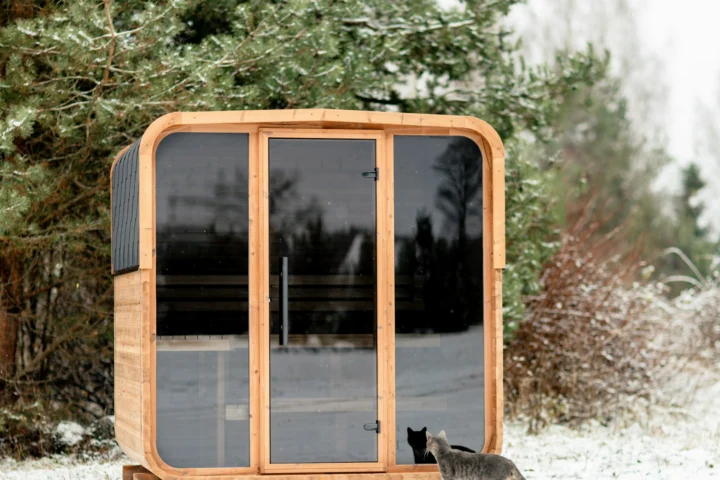
How Much Does a Home Sauna Cost? 2026 Prices by Type, Plus Installation and Running Costs
As of November 2026, makers' US stores list the smallest home saunas from about $4,000: a one person infrared cabin at $4,200…
Nov 26, 2026 · 7 min read
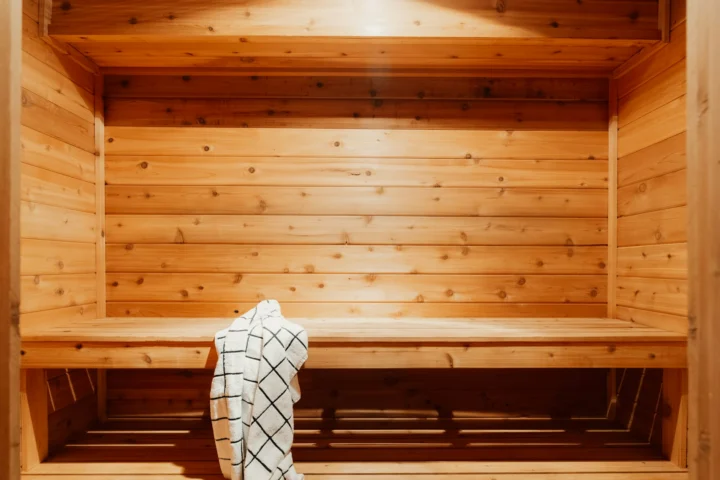
Sauna Vapor Barrier and Insulation: Layers, Foil, Taping and Mistakes
A sauna vapor barrier is a layer of aluminum foil installed on the warm side of the insulation, between the insulation and…
Nov 26, 2026 · 8 min read
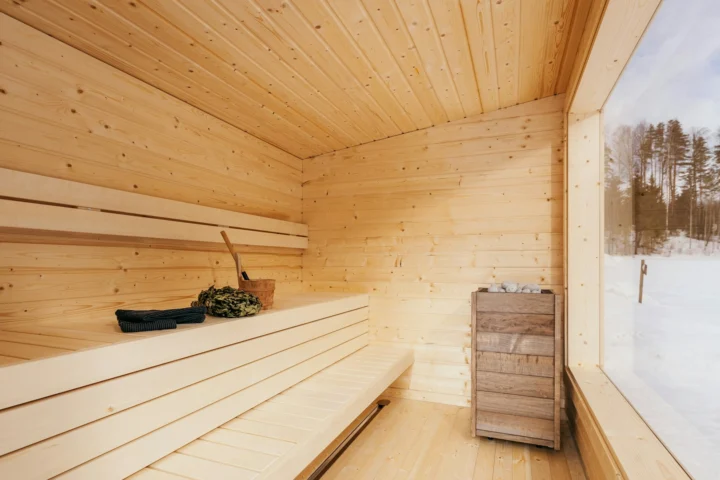
Sauna Ventilation: Vent Placement and Sizes for Electric Heaters and Wood Stoves
Harvia and HUUM both specify about six air changes per hour. Their manuals put the fresh-air intake for an electric heater (2…
Nov 26, 2026 · 8 min read